


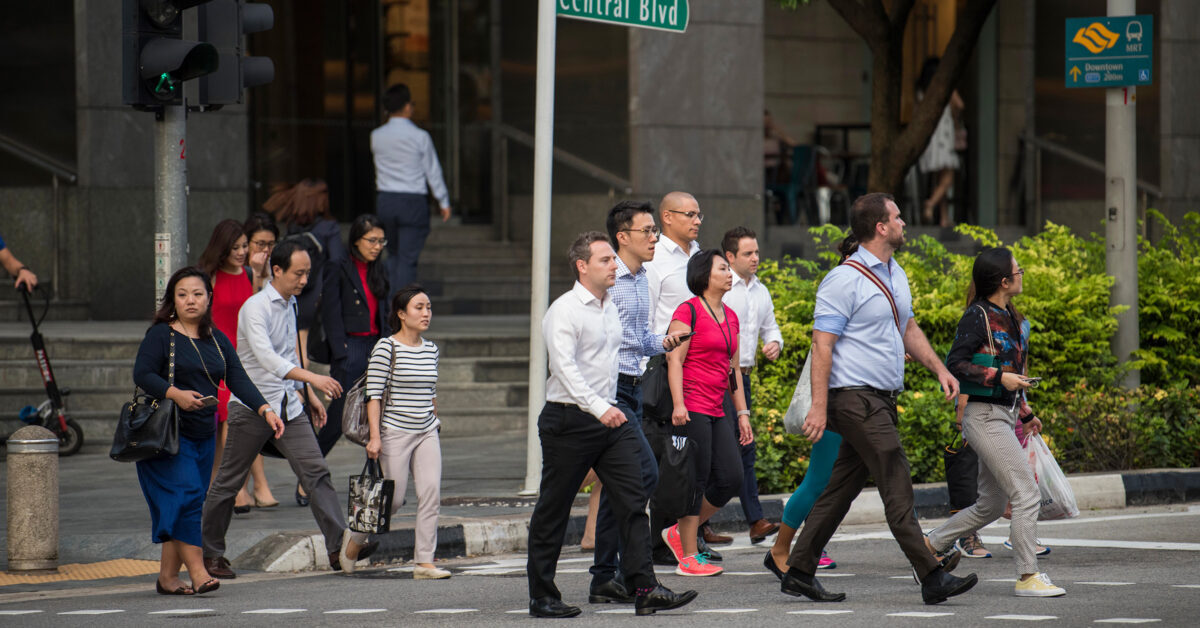
The paradox of the Lion City: high satisfaction meets exhaustion in Asia’s most competitive workplace.
Singapore consistently ranks among the world’s happiest workforces. The city-state tops regional satisfaction surveys, draws global talent to its gleaming towers, and promotes itself as the ideal destination for career-building professionals. Yet beneath these metrics, burnout spreads—quietly, efficiently, as systematically as the MRT lines that carry exhausted workers home .
The contradiction is not measurement error. It is structural feature: Singapore’s workplace culture generates simultaneous fulfillment and depletion, commitment and breakdown, loyalty and escape fantasies. Understanding this paradox requires examining the specific architecture of professional life in one of the world’s most competitive economies.
The Happiness Data
Singapore’s workplace satisfaction metrics are genuinely impressive. The city-state ranks #1 in Asia-Pacific for employee happiness in multiple surveys, with 85% reporting job satisfaction and similar percentages recommending their organizations as employers .
The sources are identifiable: compensation (among the highest globally for professional roles), safety (low crime, stable governance, reliable infrastructure), opportunity (multinational headquarters, regional leadership roles, startup ecosystem), and efficiency (streamlined bureaucracy, excellent healthcare, functional public services) .
For expatriate professionals, Singapore offers additional attractions: low taxation, English-language business environment, cultural sophistication, geographic access to regional markets. The package is rational choice optimized: maximum career advancement with minimum friction .
The Burnout Evidence
Against this satisfaction, exhaustion indicators accumulate:
Working hours: Singapore averages 44-48 hours weekly—below Hong Kong or Tokyo, but exceeding European benchmarks significantly. The “presenteeism” culture demands visible commitment beyond contractual requirements .
Mental health: 78% of Singapore workers report stress-related symptoms; burnout prevalence exceeds 50% in professional services, technology, and finance sectors. The city-state’s suicide rate among young professionals has prompted public health intervention .
Sleep deprivation: Surveys indicate Singapore workers average 6.4 hours nightly—insufficient for cognitive restoration and emotional regulation. The “hustle culture” glorifies sacrifice, with social media celebrating #grind and #riseandgrind aesthetics .
Leave utilization: Despite generous statutory provisions, annual leave often goes untaken—carried forward, forfeited, or subtly discouraged through performance evaluation and promotion timing .
The Structural Explanation
The happiness-burnout paradox emerges from specific institutional arrangements:
Meritocratic intensity: Singapore’s education and employment systems are radically meritocratic—transparent, credential-driven, relentlessly competitive. The upward mobility promise is genuine; so is the precarity of maintaining position. Falling behind is not merely disappointing but existentially threatening in a small, expensive city .
Status anxiety: The visible consumption patterns of successful professionals—private housing, international schooling, vehicle ownership, domestic help—create aspirational benchmarks that drive continuous effort. Satisfaction with current position is socially discouraged; ambition is morally mandatory .
Small labor market: Singapore’s geographic and demographic constraints mean professional networks are dense and overlapping. Reputation travels fast; opportunities emerge through relationship; unemployment is brief but terrifying. The fear of exclusion motivates overcommitment .
Cultural synthesis: Confucian duty and hierarchy, Western individual achievement, and contemporary productivity culture combine into unique pressure formation: the obligation to succeed for family, nation, and self simultaneously .
The Sectoral Variation
Burnout manifests differently by industry:
Financial services: Compensation insulates; bonuses purchase recovery and domestic support. Burnout appears as cynicism and relationship breakdown rather than financial crisis .
Technology: Equity participation aligns interest with organizational success, extending work into identity and passion. Burnout emerges as existential disillusionment when projects fail or cultures toxify .
Healthcare and education: Mission-driven commitment meets resource constraints and bureaucratic expansion. Burnout appears as moral injury—inability to deliver quality despite effort .
Gig and platform work: Flexibility without security, algorithmic management, income volatility. Burnout is physical exhaustion from multiple jobs and anxiety from unpredictable demand .
The Policy Response
Singapore’s government acknowledges the paradox through multiple interventions:
Workplace safety and health: Expanded mental health provisions, mandatory rest day requirements for specific sectors, right to disconnect discussions (though not yet legislation) .
SkillsFuture: Lifelong learning credits and career transition support, addressing obsolescence anxiety and enabling portfolio career construction as alternative to single-employer intensity .
Housing and family: Public housing policy adjustments, childcare expansion, and parental leave enhancement reducing dual-income family pressure .
Critics note implementation gaps: policy announcement exceeds enforcement; cultural change lags regulatory ambition; competitive pressure overwhelms protective intention .
The Individual Adaptation
Workers navigate the paradox through personal strategies:
Boundary maintenance: Explicit availability limits, physical separation of work and home spaces, ritualized recovery practices (exercise, religious participation, hobby immersion) .
Career portfolio: Multiple income streams, side projects, investment income reducing single-employer dependency .
Exit planning: Financial independence calculation, overseas opportunity monitoring, entrepreneurial preparation. The satisfaction is genuine; so is the contingency planning .
Therapeutic support: Counseling utilization increasing, though stigma persists; peer support networks emerging through professional associations and social media .
The Global Relevance
Singapore’s paradox is extreme version of developed economy pattern: high-performance work systems generating engagement and exhaustion simultaneously. The city-state’s small scale and intensive measurement make dynamics visible; similar patterns appear in London, New York, Sydney, Dubai .
The policy challenge is universal: how to maintain competitive economic dynamism while protecting human sustainability. Singapore’s experiments—regulatory, cultural, technological—offer early indicators for larger jurisdictions .
The happiness-burnout coexistence suggests reframing: not “work-life balance” (implying separation) but “sustainable intensity” (acknowledging integration). The goal is not reduced ambition but renewable commitment—careers sustained across decades rather than consumed in years.
The Lion City roars with productivity. Whether it can also purr with restoration remains the defining question.
Singapore Workforce Paradox at a Glance
| Dimension | Happiness Driver | Burnout Source |
|---|---|---|
| Compensation | High salaries, low taxation | Cost of living, status consumption |
| Opportunity | Global headquarters, regional roles | Competitive intensity, precarity |
| Efficiency | Functional infrastructure, low friction | Presenteeism, availability expectation |
| Security | Stable governance, strong institutions | Small market, dense networks, reputation risk |
| Culture | Meritocratic advancement | Continuous comparison, ambition mandate |

