
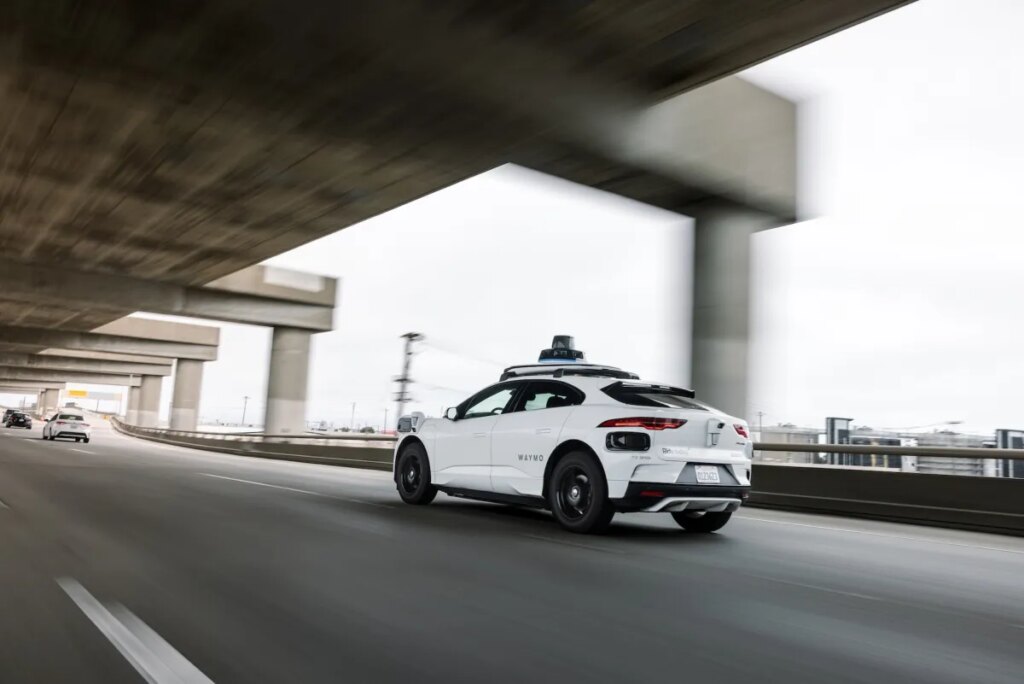
The capital requirements are staggering. Building fleets of self-driving cars, mapping every road, training neural networks on billions of miles, maintaining 24/7 operations centers, and surviving regulatory gauntlets demands war chests beyond traditional automotive investment. Waymo—Alphabet’s autonomous vehicle subsidiary—has consumed $5.5 billion since 2009 without profitability .
Now, the $16 billion funding round: reportedly led by Alphabet itself, with participation from external investors including Andreessen Horowitz, AutoNation, and Magna International. The valuation—$30-40 billion pre-money—positions Waymo as independent entity despite continued Alphabet control, enabling employee equity liquidity and strategic partnership flexibility .
The round signals multiple truths: about autonomous vehicle economics, about Alphabet’s strategic patience, about market confidence in technological moats, and about the timeline for genuinely driverless transportation.
The autonomous vehicle leader bets on scale, and the market bets on its lead.
The Scale Imperative
Waymo’s current operations—Phoenix, San Francisco, Los Angeles, Austin—represent pilot programs rather than mass deployment. The funding enables expansion: 10+ additional cities by 2027, 100,000+ vehicle fleet (from current ~700), and 24/7 service availability replacing geofenced, daytime limitations .
Unit economics demand scale. Current $1.50-2.00 per mile operating costs—sensor maintenance, remote monitoring, fleet management, insurance—must decline to $0.70-0.90 to compete with human-driven ride-hail and personal vehicle ownership. Scale enables: manufacturing learning curves, insurance risk pooling, operational density reducing deadhead miles, and software amortization across larger fleet .
The $16 billion—largest single funding round in autonomous vehicle history—purchases time and terrain to achieve these economies before capital markets tighten or competitors catch up.
The Competitive Landscape
Waymo’s perceived lead—1 million+ autonomous miles weekly, no safety driver in multiple markets, public robotaxi service since 2020—is substantial but contested:
Tesla promises Full Self-Driving via camera-only approach at fraction of Waymo’s sensor cost ($15,000 per vehicle versus $100,000+), but regulatory approval and safety validation lag significantly. Musk’s 2024-2025 robotaxi timeline has slipped repeatedly .
Cruise (General Motors) suspended operations late 2023 after San Francisco pedestrian incident, resuming limited service 2024 with damaged credibility and leadership turnover. The regulatory setback benefited Waymo’s cautious, methodical approach .
Amazon’s Zoox pursues purpose-built vehicle (bidirectional, no steering wheel) but remains pre-launch; Apple’s Project Titanterminated 2024 after $10 billion expenditure; Chinese competitors (Baidu Apollo, Pony.ai, WeRide) advance domestically but face US market barriers .
Waymo’s funding round—largest in sector history—reflects investor consensus that technological lead has converted to structural advantage: mapping data, operational experience, regulatory relationships, and public acceptance that competitors cannot rapidly replicate.
The Alphabet Calculus
Google’s parent has funded Waymo for 15 years without revenue commensurate with investment. The external round—maintaining majority control while diluting economic exposure—signals strategic evolution:
Risk distribution: Sharing $16 billion exposure with external investors reduces Alphabet’s balance sheet impact while maintaining strategic optionality.
Valuation validation: $30-40 billion—10x Cruise’s 2021 valuation, comparable to major automakers—establishes market price for potential future transactions (IPO, spin-off, partnership).
Employee retention: Pre-IPO equity—liquid in 2025-2026 per funding terms—addresses talent competition from generative AI startups offering immediate paper wealth .
Alphabet’s continued commitment—reportedly $5 billion of the $16 billion round—demonstrates long-term conviction despite short-term losses. The “other bets” segment, which includes Waymo, lost $4 billion in 2023; this round extends runway for eventual profitability or strategic exit.
The Regulatory and Social Context
Federal framework absent: No national autonomous vehicle legislation; state-by-state permission creates patchwork compliance. Waymo’s California, Arizona, Texas operations required individual regulatory cultivation; national expansion demands federal clarity or state-by-state repetition .
Safety record: Waymo reports 6 million+ autonomous miles with fewer injury-causing incidents per mile than human drivers, but high-profile collisions—including 2023 San Francisco pedestrian fatality involving Cruise, not Waymo—generate disproportionate media attention and public anxiety .
Labor opposition: Teamsters and ride-hail driver unions lobby against autonomous vehicle expansion, citing job displacement (3.5 million US professional drivers) and safety concerns. Waymo’s gradual, city-by-city approach—versus Tesla’s promised rapid deployment—may reduce political backlash .
The Economic Implications
If Waymo achieves projected scale—100,000 vehicles, $0.70/mile costs, 10+ markets by 2028—the transportation economics transform:
Ride-hail disruption: Uber and Lyft face structural cost disadvantage; partnership or acquisition likely. Waymo has rejected exclusive Uber partnership, pursuing direct consumer service and white-label fleet provision.
Personal vehicle ownership: Urban households may defer or abandon car purchase given reliable, cheaper autonomous alternative. Automotive industry faces demand destruction in dense markets.
Real estate: Parking structure obsolescence, suburban office park revival (commute becomes productive time), urban density tolerance increase (no parking requirements).
The $16 billion purchases optionality on these transformations—the right to participate in trillion-dollar market restructuring without guarantee of winning.
The Timeline Reality
Full autonomy—any road, any weather, no human intervention—remains distant. Waymo’s current service operates mapped, geofenced, fair-weather conditions with remote monitoring backup. The funding extends this “managed autonomy” phase toward broader capability, not immediate universal deployment .
2026-2027 milestones: 10-city operations, 100,000 vehicles, profitability in mature markets (Phoenix, San Francisco). 2028-2030: national network, highway autonomy, trucking expansion. Post-2030: generalized autonomy contingent on regulatory, technological, and social evolution.
The $16 billion is not endpoint investment but phase transition financing—the capital required to move from experiment to industry, from curiosity to infrastructure. Whether the bet pays depends on execution speed, competitive response, and society’s willingness to surrender driving to algorithms.
Waymo Funding Context
| Metric | Detail |
|---|---|
| Round size | $16 billion (largest in autonomous vehicle history) |
| Lead investors | Alphabet ($5B), Andreessen Horowitz, AutoNation, Magna |
| Pre-money valuation | $30-40 billion |
| Historical investment | $5.5 billion since 2009 |
| Current fleet | ~700 vehicles, 4 cities |
| Target 2027 | 100,000 vehicles, 10+ cities |
| Unit cost target | $0.70-0.90/mile (from current $1.50-2.00) |