
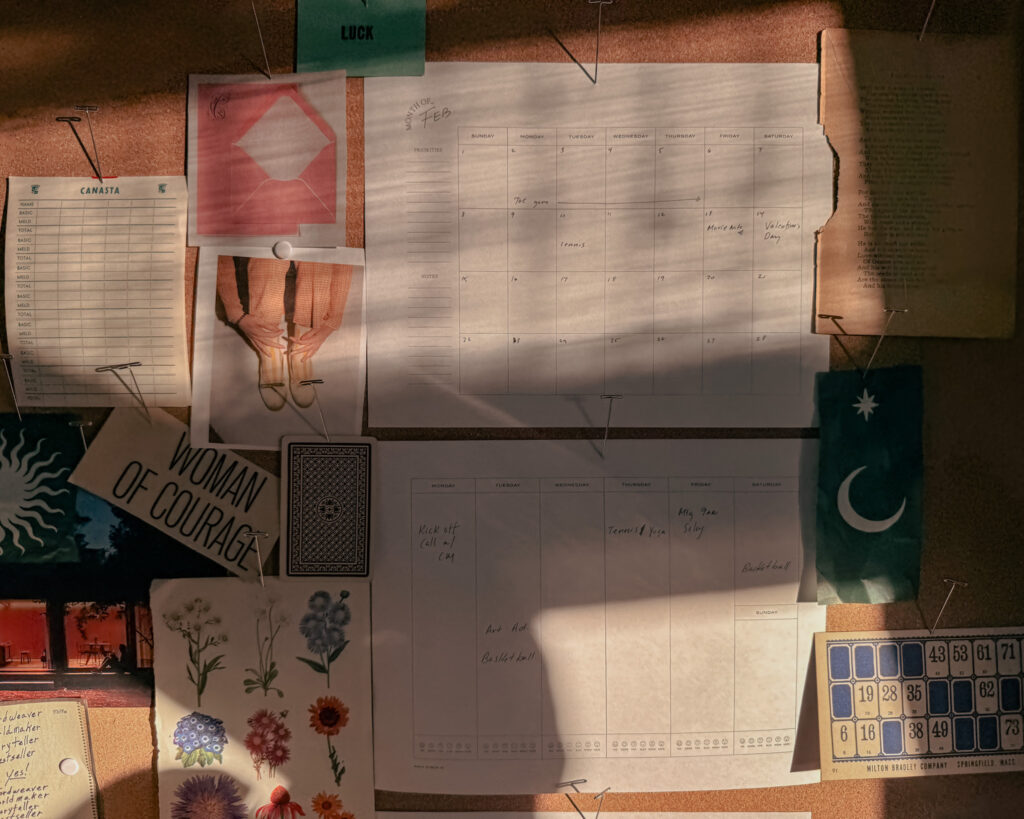
How a Minneapolis lifestyle brand turned digital downloads into a ritual of intentional living.
The planner arrived not as leather-bound luxury but as pixels on a screen. No embossed cover, no ribbon bookmark, no satisfying heft of imported paper. Instead: a PDF, downloadable immediately upon purchase, printable at home on standard letter sheets, infinitely reproducible, deliberately impermanent. This is the Wit & Delight Printable Planner—and its modest format contains a sophisticated philosophy about organization, accessibility, and the psychology of productivity .
Kate Arends, founder of the Minneapolis-based lifestyle brand, launched Wit & Delight in 2009 as a personal blog documenting her twenties—apartment decorating on budgets, navigating early career confusion, building relationships. The platform evolved into a design-focused media company reaching millions, but retained its founding ethos: practical tools for imperfect lives, aspirational without being exclusionary .
The printable planner represents this ethos in physical form. Unlike subscription-based apps or expensive bound agendas, it offers one-time purchase, perpetual use, complete customization. Users print only needed pages, discard completed weeks without guilt, and adapt layouts to specific circumstances—student schedules, freelance projects, parenting logistics, creative pursuits .
The Architecture of Intention
The 2025-2026 planner (released August 2025) contains over 50 pages organized into functional categories: annual overview calendars, monthly spreads with habit trackers, weekly layouts with priority sections, project planning worksheets, financial tracking templates, and blank notes pages .
The weekly spread demonstrates Arends’s design intelligence. Each day receives horizontal space for appointments and vertical columns for “Top Three” priorities—acknowledging that productivity research consistently shows diminishing returns beyond three daily objectives. A dedicated “Notes” section captures emergent tasks without disrupting primary focus. The layout assumes interruption, imperfection, the reality of competing demands .
Monthly spreads incorporate habit tracking—visual grids where users mark completion of desired behaviors (exercise, reading, hydration, meditation). The psychological literature on streak maintenance and visual progress reinforcement supports this design: the simple act of marking an X creates dopaminergic reward that sustains behavior better than internal motivation alone .
The project planning worksheets translate abstract goals into concrete steps. Users define objectives, identify necessary resources, establish timelines, and anticipate obstacles. This structure mirrors implementation intention research—studies showing that people who specify when, where, and how they will act are significantly more likely to follow through than those with vague commitment .
The Printable Advantage
Digital calendars offer synchronization, reminders, infinite editing. Bound planners provide tactile satisfaction and archival continuity. The printable format occupies strategic middle ground:
Customization without complexity. Users print only relevant pages—skip financial tracking if using dedicated software, print extra notes pages during intensive project periods, resize layouts for different paper formats. The PDF format permits annotation in tablet apps or traditional handwriting .
Impermanence as feature. Completed pages discard without guilt; mistakes require no correction fluid; experimental layouts abandoned without waste. This low-stakes flexibility encourages actual use rather than preservation anxiety—the phenomenon where expensive notebooks remain empty to avoid “ruining” them.
Accessibility across economics. At approximately $15-25 (varying by seasonal promotion), the printable planner costs fraction of equivalent bound products. Printing expenses add marginal cost, but household printer access or library services make this format available to budgets excluded from premium stationery markets .
Environmental consideration. Digital distribution eliminates shipping emissions; home printing uses existing paper supplies; on-demand production prevents overstock waste. The model aligns with circular consumption principles increasingly prioritized by younger demographics .
The Ritual of Implementation
Arends emphasizes that planners fail without implementation rituals . The Wit & Delight approach includes:
Sunday preparation. Review upcoming week, identify Top Three priorities per day, note potential obstacles, gather necessary materials. This proactive orientation reduces reactive stress and decision fatigue during execution.
Daily morning consultation. Five-minute review of day’s structure before digital engagement. This intentional priming establishes cognitive framework that resists distraction.
Evening completion. Mark habit trackers, migrate unfinished tasks, note accomplishments. The closure ritual prevents rumination and creates sense of progress.
These practices transform the planner from organizational tool into behavioral architecture—external structure supporting internal discipline.
The Aesthetic Dimension
Wit & Delight’s design language—minimalist typography, muted color palettes, generous white space—reflects contemporary Scandinavian and Japanese influences. The printable format does not compromise this aesthetic; pages remain visually calming, professionally designed, worthy of display .
This matters because environmental aesthetics influence psychological states. Research on environmental psychology demonstrates that visually cluttered or discordant spaces increase cortisol and reduce cognitive performance. The planner’s clean design creates micro-environment of order within chaotic schedules .
The Community Context
The printable planner exists within broader Wit & Delight ecosystem: blog content on productivity and wellness, social media community sharing organized spaces, podcast discussions with experts on habit formation. Arends has constructed integrated lifestyle infrastructure where the planner serves as physical anchor for digital content and community engagement .
Users share customized layouts, adaptation strategies, and completed spreads—transforming individual organization into collective practice. The hashtag #witanddelightplanner aggregates thousands of implementations, demonstrating diverse applications and inspiring new users.
The Productivity Paradox
Contemporary culture suffers planner proliferation—endless systems promising transformation through better organization. The Wit & Delight printable version acknowledges this skepticism through its modest claims and accessible format. It does not promise life transformation; it offers structure for those who want it, flexibility for those who need it, beauty for those who appreciate it.
The printable format ultimately respects user autonomy—the recognition that no external system can substitute for internal motivation, that organization serves life rather than consuming it, that the best planner is the one actually used.
Kate Arends’s creation succeeds not through technological innovation or luxury positioning, but through thoughtful attention to how people actually live: imperfectly, variously, needing support without prescription. The PDF downloads, the printer whirs, the week begins.
Wit & Delight Printable Planner at a Glance
| Feature | Specification | Benefit |
|---|---|---|
| Format | PDF download, 50+ pages | Immediate access, infinite reproduction |
| Layouts | Annual, monthly, weekly, project, financial, notes | Comprehensive life management |
| Design | Minimalist, muted palette, generous white space | Visual calm, professional aesthetic |
| Cost | $15-25 one-time purchase | Accessible vs. bound planners |
| Customization | Print-on-demand, adaptable sizing | Personal relevance, reduced waste |
| Key structure | “Top Three” daily priorities | Research-based productivity focus |