
Political continuity meets semiconductor supercycle in Tokyo’s record-breaking rally.
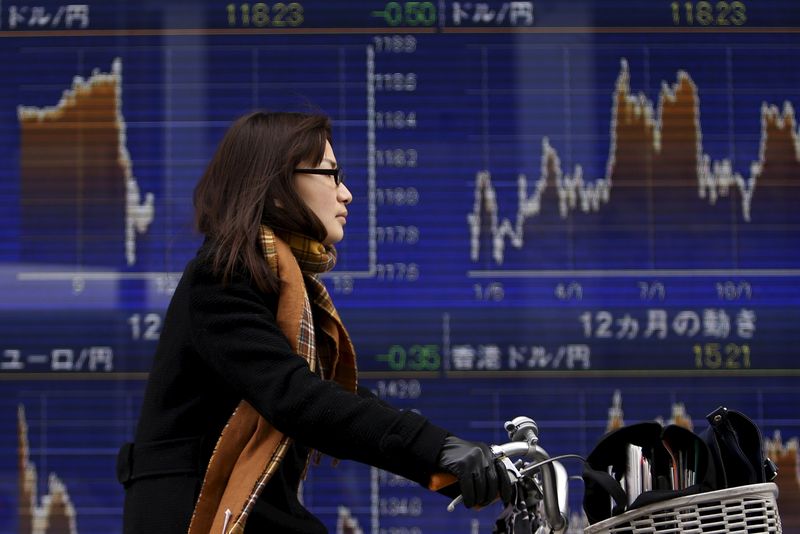
The Nikkei crossed 58,000 for the first time. Not quietly—on volume surging 40% above average, with semiconductor names leading and foreign buying accelerating. The catalyst: Sanae Takaichi’s victory in the ruling Liberal Democratic Party’s leadership selection, positioning her to become Japan’s first female prime minister and, markets wagered, maintain the policy continuity that has driven Japanese equities to 34-year highs .
The Takaichi win—narrow, contested, ideologically charged—nonetheless reassured investors who feared disruption to Abenomics’ monetary legacy and corporate governance reforms. Asia’s broader tech rally, fueled by AI demand and supply chain realignment, found concentrated expression in Tokyo’s semiconductor and precision machinery complex.
The Takaichi Catalyst
Sanae Takaichi, 63, emerged from LDP factional warfare as compromise candidate—nationalist credentials appeasing conservatives, technocratic reputation reassuring business. Her economic platform: maintain ultra-loose monetary policy, accelerate defense spending (benefiting Mitsubishi Heavy, Kawasaki, IHI), and deepen corporate reform pressuring cross-shareholding unwinding and dividend expansion .
Markets had feared alternative outcome: Shigeru Ishiba—veteran reformer but monetary hawk, advocating gradual rate normalization—would have strengthened yen, compressed export margins, and disrupted carry trade dynamics that have funded global risk appetite. Takaichi’s dovish continuity preserved weak yen environment supporting Toyota, Sony, SoftBank overseas earnings translation .
The Nikkei’s 2.8% single-session surge—6,000 yen candle—reflected relief more than enthusiasm. Takaichi is not market favorite; she is known quantity, predictable deviation from status quo rather than transformation. The rally’s breadth—90% of Topix components advancing—suggested systematic repositioning rather than thematic speculation .
The Semiconductor Supercycle
Tech leadership extended beyond Japan. Taiwan’s Taiex gained 1.9%, South Korea’s Kospi 1.4%, Hang Seng Tech Index 2.3%—AI demand and supply chain restructuring driving foundry, memory, and equipment names across the region .
Tokyo Electron—Lithography, deposition, etching equipment—surged 5.7%, record high. Advantest—semiconductor testing—added 4.2%. Sony, image sensor dominance in smartphone and automotive cameras, rose 3.1% on AI vision application expansion. The “Silicon Nippon” complex—materials, equipment, components supporting TSMC, Samsung, Intel—commands premium valuations as geopolitical risk accelerates supply chain diversification from Taiwan concentration .
Memory dynamics supported Samsung and SK Hynix: HBM3E (high-bandwidth memory for AI accelerators) supply-constrained, pricing power extreme, margins expanding despite cyclical DRAM weakness in consumer electronics. The AI semiconductor market—$120 billion 2024, projected $300 billion 2027—concentrates gains in memory and advanced packaging where Asian suppliers dominate .
The Foreign Flow
Overseas investors—pension funds, hedge funds, ETF providers—have reallocated aggressively to Japanese equities. $25 billion inflow year-to-date 2026 through September, surpassing full-year 2023. The Takaichi confirmation triggered additional $3 billion single-week surge, largest since April 2023 .
Structural factors support sustained interest: Tokyo Stock Exchange governance reforms ( “name and shame” of low price-to-book companies), NISA ( tax-exempt investment account) expansion driving retail participation, yen weakness enhancing dollar-denominated returns for unhedged foreign holders .
Warren Buffett’s Berkshire Hathaway—$20 billion Japanese trading house stake, announced 2020, expanded 2023-2024—provided validation for value-oriented foreign capital. The “Buffett effect”— emulation by risk-averse institutional allocators—continues despite trading house underperformance versus semiconductor leaders .
The China Counterpoint
Shanghai and Shenzhen—absent rally, modest declines—highlighted divergence. The Takaichi stimulus and tech surge found no mainland echo: property sector stress ( Country Garden liquidation petition, Vanke liquidity concerns), consumer confidence collapse, and regulatory overhang ( Ant Group restructuring, gaming license uncertainty) overwhelmed AI thematic .
Hong Kong—intermediate position—rose 1.1% on tech names ( Tencent, Meituan, BYD) but lagged regional peers. The “China discount”—valuation compression reflecting geopolitical risk, regulatory unpredictability, and growth deceleration—persists despite policy stimulus announcements ( rate cuts, fiscal expansion, property support) .
Supply chain reallocation—“China plus one”—benefits ASEAN ( Vietnam, Malaysia, Thailand manufacturing), India ( Apple assembly expansion), and Mexico ( nearshoring), but Japan’s semiconductor equipment and materials—irreplaceable technological position—captures disproportionate value from geopolitical fragmentation .
The Risk Calibration
Near-58,000 Nikkei—34-year high, approaching 1989 bubble peak—invites historical comparison and valuation anxiety. Current price-to-earnings ( 17x forward) trails 1989’s 60x+; price-to-book ( 1.3x) suggests undervaluation versus global peers; dividend yield ( 2.1%) exceeds US and European averages. The rally’s foundation—earnings growth, governance reform, monetary support—differs fundamentally from 1989’s credit-fueled speculation .
Concentration risk nonetheless concerns: semiconductor and tech names—30% of Nikkei weighting—vulnerable to AI demand cyclicality, US-China technology restrictions, and Korea-Taiwan competitive response. The Takaichi government’s defense spending acceleration— 2% GDP target, counter-strike capability acquisition—may divert capital from civilian industrial competitiveness .
Yen volatility— sudden appreciation if BOJ policy normalization accelerates or carry trade unwinds— threatens export earnings translation and foreign holder returns. Takaichi’s dovish reputation reduces probability but does not eliminate risk.
The Broader Implications
The Asia tech rally— Japan-led, Taiwan-supported, Korea-participating, China-excluding— maps geopolitical alignment: US alliance network benefits from AI semiconductor demand and supply chain restructuring; China faces technology access restrictions and domestic demand collapse .
The Takaichi market response— record highs on political continuity— underscores investor preference for predictable policy over transformational reform. Japan’s “lost decades” taught risk aversion; the Abenomics-Takaichi lineage promises gradual, managed change rather than disruptive innovation.
The 58,000 Nikkei is not destination but waypoint. Whether Japanese equities sustain premium valuation depends on corporate governance follow-through, monetary policy stability, and semiconductor cycle duration— variables that Takaichi’s continuity influences but does not control.
Asia Tech Rally Context (September 2026)
| Index | Performance | Driver |
|---|---|---|
| Nikkei 225 | +2.8% (58,000 record) | Takaichi policy continuity, semiconductor demand |
| Topix | +2.5% (90% breadth) | Broad-based foreign inflow |
| Taiwan Taiex | +1.9% | TSMC, foundry capacity expansion |
| Korea Kospi | +1.4% | Samsung HBM, SK Hynix memory pricing |
| Hang Seng Tech | +2.3% | Tencent, Meituan recovery |
| Shanghai Composite | -0.3% | Property stress, consumer weakness |